
How to Choose the Right Bulb for a Colored Glass Wall Sconce
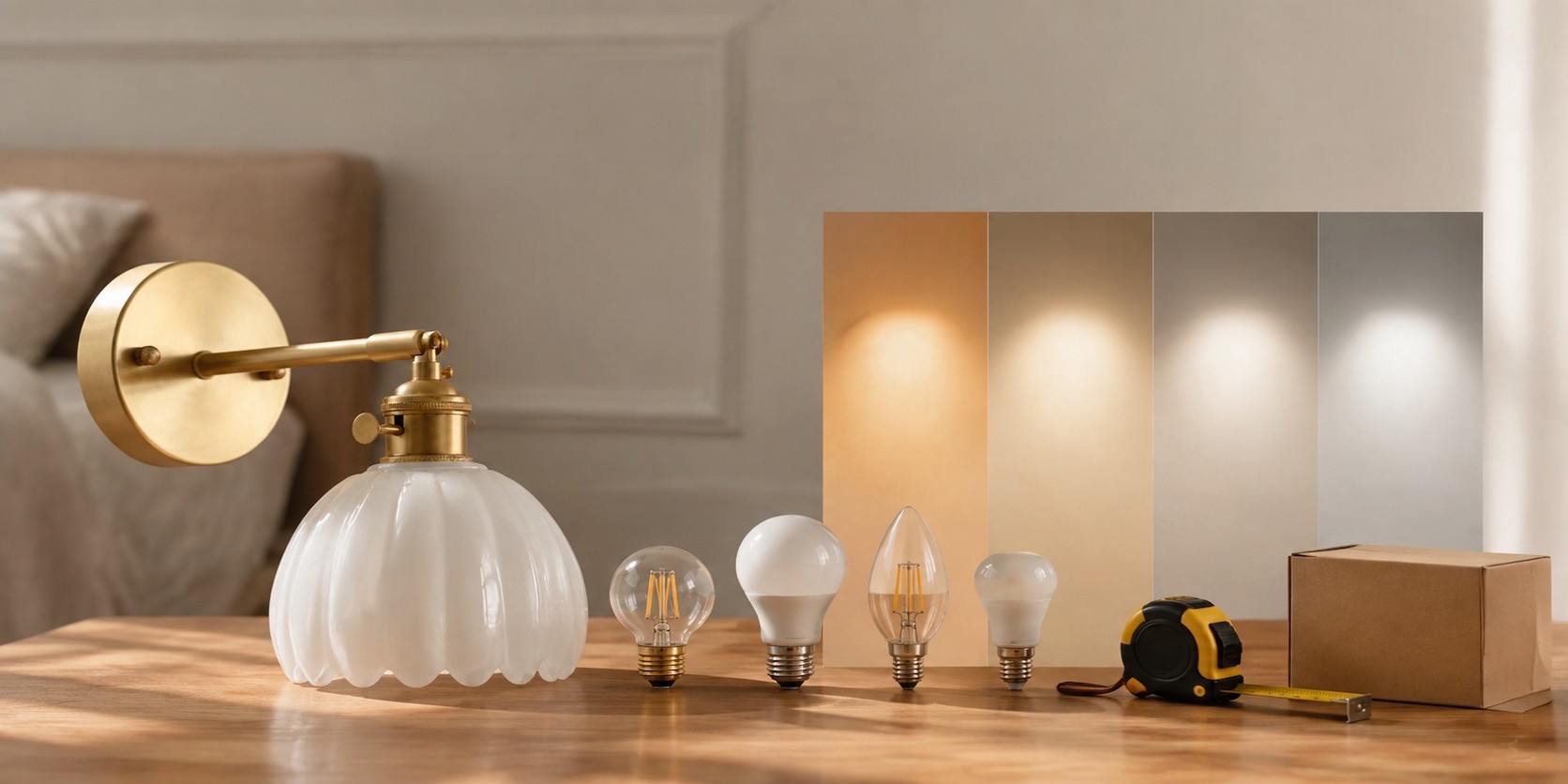
Choose the bulb in this order: match the base, respect the fixture's maximum rating, confirm the bulb's shape fits inside the shade, then pick brightness and colour for the room. A bulb that screws in is not automatically a bulb that works.
Read the Socket Label Before You Shop
Wall lights sold in Poland and the rest of Europe most often take an E27 or E14 screw base, and the fitting's sticker or socket printing tells you which one, plus a maximum wattage you must not exceed. That limit is about heat, not brightness, so an LED using far fewer watts is usually fine as long as its base and size match. Photograph the label before shopping so you are not guessing in the bulb aisle.
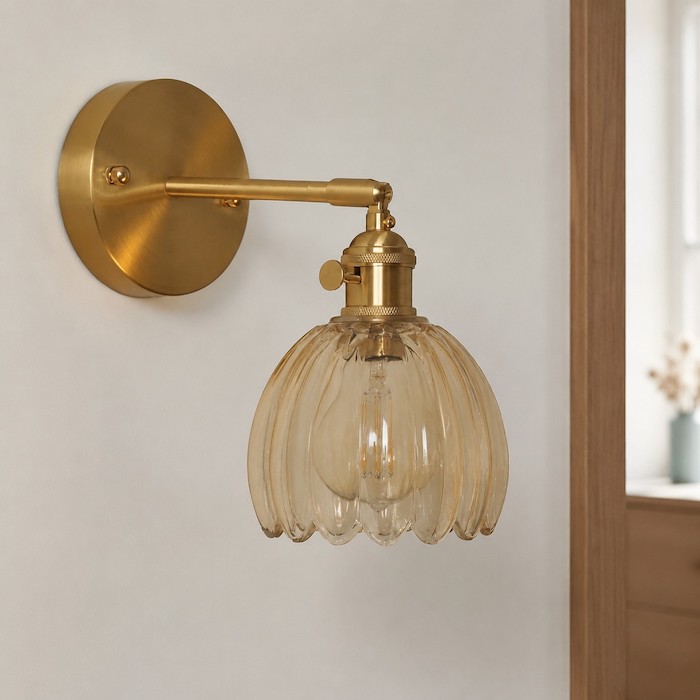
Fixtures that publish their socket, rating and shade size make this check much easier. On the S98 tulip glass wall lamp listing, for example, the base type, maximum power and 12 cm shade diameter are stated together, so you can rule bulbs in or out before anything arrives at your door.
Let Lumens, Not Watts, Set the Brightness
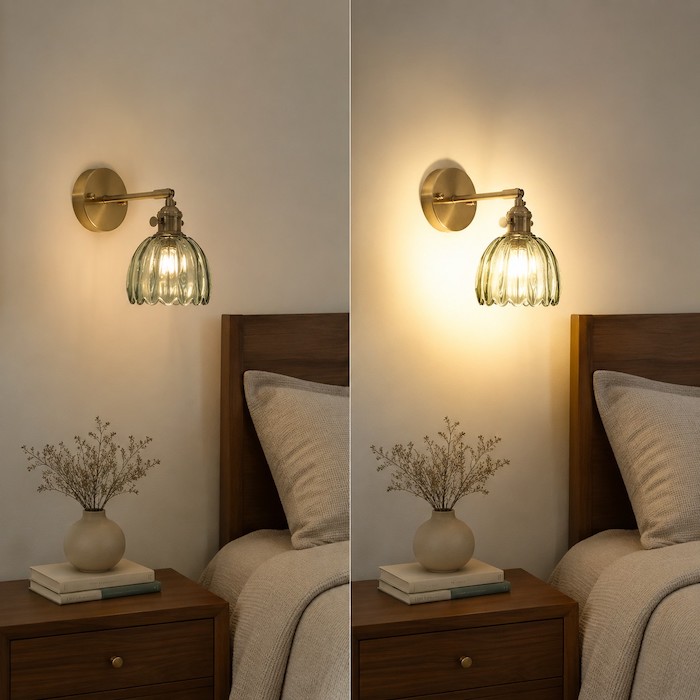
LED packaging lists lumens, which describe actual light output. For a bedside or hallway sconce, roughly 150 to 400 lumens usually gives a calm accent glow; only go higher when the fitting is the room's main source. Two bulbs with the same wattage can differ in lumens, so compare the lumen figure first and treat the "equivalent watts" badge as a rough hint.
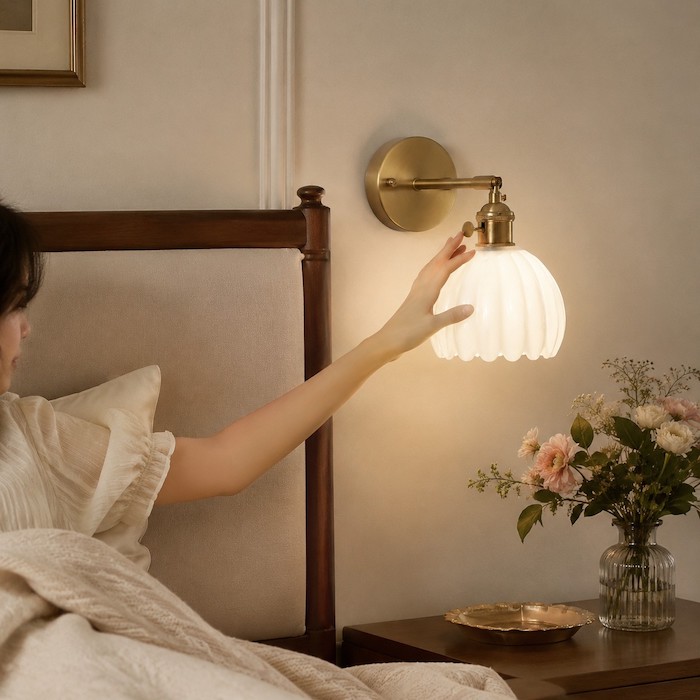
Judge the result from the positions where you actually use the room. If a bare bright point keeps pulling your eye from the pillow or the corridor, lower the lumen output or choose a bulb with a frosted envelope. When a correctly sized bulb still feels harsh at night, the sightline test in Why Your Bedside Lighting Feels Harsh and How a Glass Wall Sconce Softens It will tell you whether the problem is really the bulb.
Colour Temperature and Colour Rendering Change the Glass
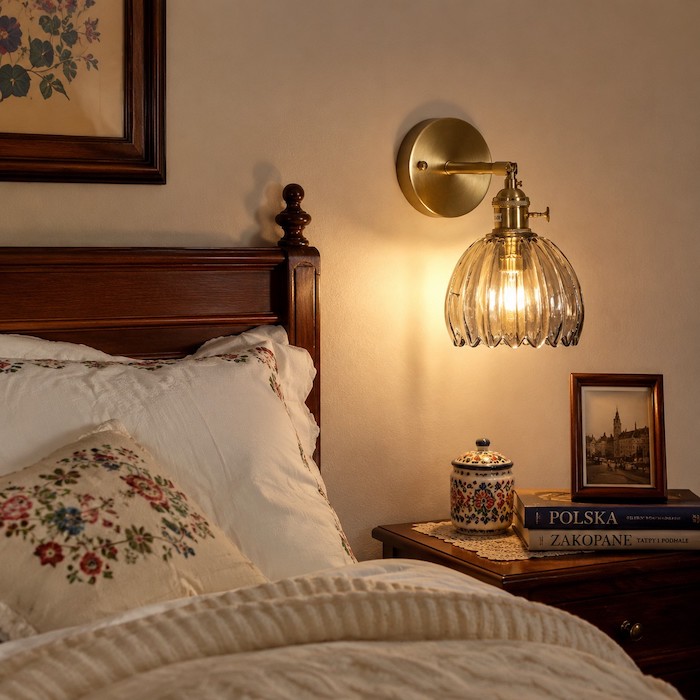
Colour temperature, measured in kelvins, describes how warm or cool the light looks; the colour-temperature explainer covers the scale in detail. Around 2200K to 2700K reads candle-warm and flatters amber, green or smoky glass in the evening, while 4000K looks crisper but can make tinted glass feel cold and slightly grey. Buy one bulb first and test it at night before committing a whole room to a kelvin value.
Colour rendering matters just as much behind tinted glass. A bulb with a colour rendering index of 90 or above keeps wall paint, bedding and skin tones looking like themselves, while a cheap low-CRI bulb can make a beautiful shade look muddy. When you are torn between two tinted finishes, the evening comparison in Colored Glass vs Frosted Glass Wall Sconces: Which Better Suits a Bedroom? shows how the same bulb behaves behind different glass.
Match the Bulb Shape to the Shade
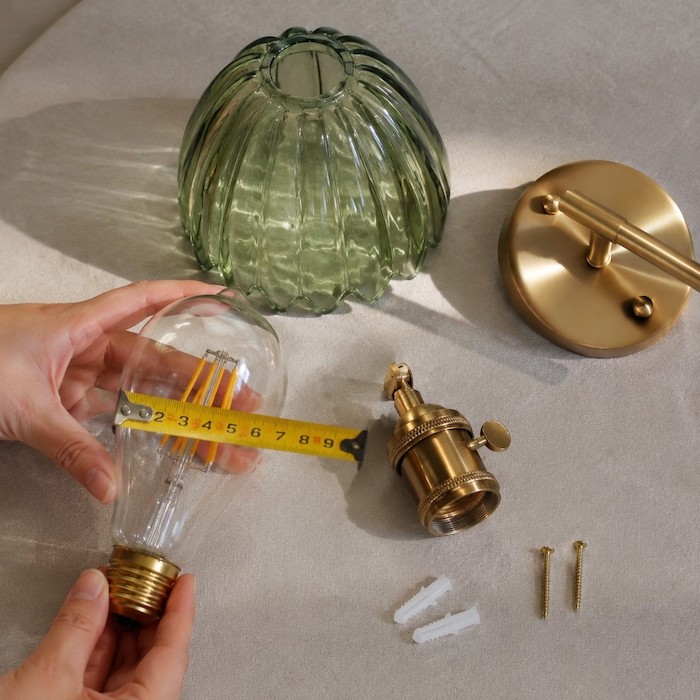
A bulb can be electrically perfect and physically wrong. Measure the inside of the shade and compare it with the bulb's widest point: compact G45 golf-ball and candle LEDs suit small glass shades, while large G80 or G95 globes need generous open shades. Through clear or lightly tinted glass the bulb itself is on display, so a filament-style LED often looks better there; behind opal or frosted glass a standard bulb is fine because nobody sees it.
This is where published shade dimensions earn their keep. A compact fitting such as the S98, with its 12 cm tulip glass shade, pairs comfortably with a small G45 or candle LED, whereas a tall oversized globe would crowd the glass and show a hard bright edge through the colour.
Check Dimming Before You Pay
Dimming only works when three parts agree: a dimmable bulb, a fixture wired for dimming, and a dimmer switch that matches LED loads. A dimmable bulb screwed into a non-dimmable fitting with a simple on-off switch gives you full brightness and nothing more, and a mismatched dimmer is the classic cause of flicker and buzzing. If your sconce has a fixed push-button switch, spend the dimming budget on a lower-lumen bulb or a second light layer instead.
A Five-Step Fit Check Before You Install
- Photograph the socket label and note the base type and maximum wattage.
- Choose a lumen level for the room's evening mood, not the highest available.
- Pick a colour temperature near 2200K to 2700K and a CRI of 90 or above.
- Measure the bulb's widest point against the inside of the shade.
- Test the bulb at night from the bed and the doorway before disposing of the packaging.
Keep the winning bulb's details next to the fixture's own records. If you own the S98, saving the bulb model beside the current S98 product page means a replacement two years from now is a two-minute order instead of another evening of testing.
Bulb Questions Buyers Actually Ask
Can I put an LED bulb in any wall sconce?
Usually yes, provided the base matches, the real wattage stays under the fixture limit, and the bulb body fits inside the shade. In small enclosed shades, choose LEDs rated for enclosed fixtures so heat does not shorten their life.
Why does my LED bulb flicker in the sconce?
The most common causes are a dimmer that does not support LED loads, a non-dimmable bulb on a dimming circuit, or a loose contact in the socket. Test the bulb in a simple on-off lamp first; if it stops flickering there, the dimmer or wiring is the problem, not the bulb.
What brightness is enough for a bedside sconce?
For most bedrooms, 150 to 400 lumens per sconce works as a comfortable accent layer. If you read in bed, add a directed reading light instead of pushing a decorative glass shade to an uncomfortable brightness.
Is a filament LED a good idea behind coloured glass?
Behind clear or pale glass it looks attractive because the glowing filaments are part of the design. Behind deep tints the glass filters the light anyway, so a simpler opal bulb with the same lumens and CRI performs identically and often costs less.
Can I use a smart bulb in a wall sconce?
Yes, if its size fits the shade and you keep the wall switch on so the bulb stays powered and reachable by the app. A smart bulb is also a practical way to add dimming when the fixture itself only has an on-off switch.


