
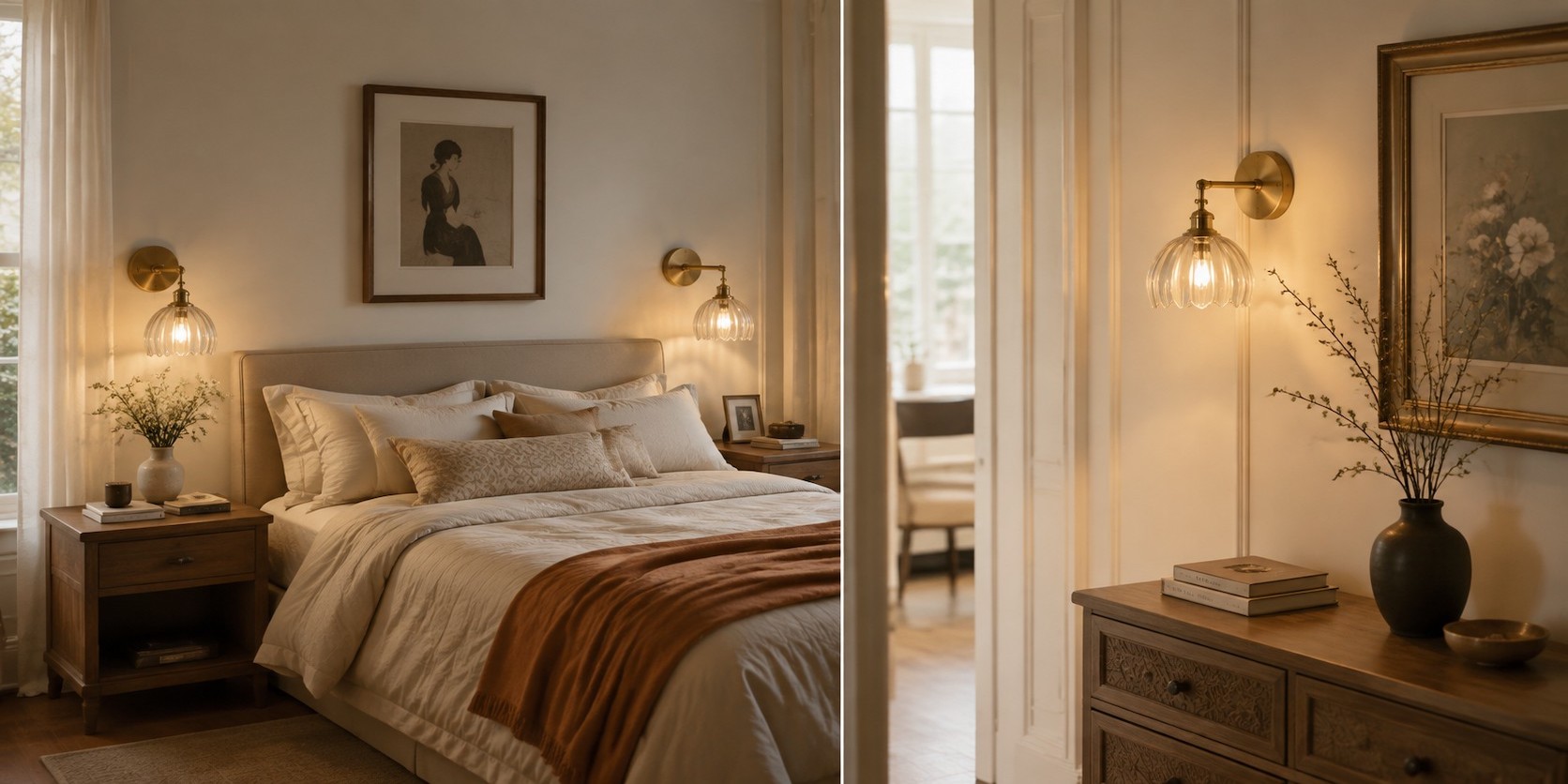
Wall Sconce Height Guide for Bedsides, Hallways and Bathroom Mirrors
Start with the standard heights: 75 to 90 cm above the top of your mattress at a bedside, about 165 cm from the floor in a hallway, and standing eye level beside a bathroom mirror. Then fine-tune with a taped paper mock-up, because no single number works in every room. Your eye level, furniture and door swing decide the final mark.
Standard Heights to Start From
These are the measurements installers and lighting guides reach for most often. Treat each one as the centre of the light source or shade, not the top of the fitting, and adjust a few centimetres either way once you test it in your own room.
| Location | Standard starting height | Check before committing |
|---|---|---|
| Beside the bed | 75–90 cm above the top of the mattress, usually 110–130 cm from the floor | Source hidden when lying down; switch reachable without sitting up |
| Hallway | About 165 cm from the floor to the centre of the shade | Shoulders, bags and doors pass without contact |
| Beside a bathroom mirror | Standing eye level, roughly 150–165 cm from the floor | Even face light; fitting rating suits the wet area |
The table assumes an average ceiling and an average adult. Tall headboards, deep mattresses, low doors and children all shift the right answer, which is why a fitting with clearly published dimensions helps: the S98 product measurements, for example, list the 23 cm overall height and 13.5 cm wall plate, so you can see exactly how much wall the fitting claims above and below your chosen centre point.
Why the Standard Number Is Only a Starting Point
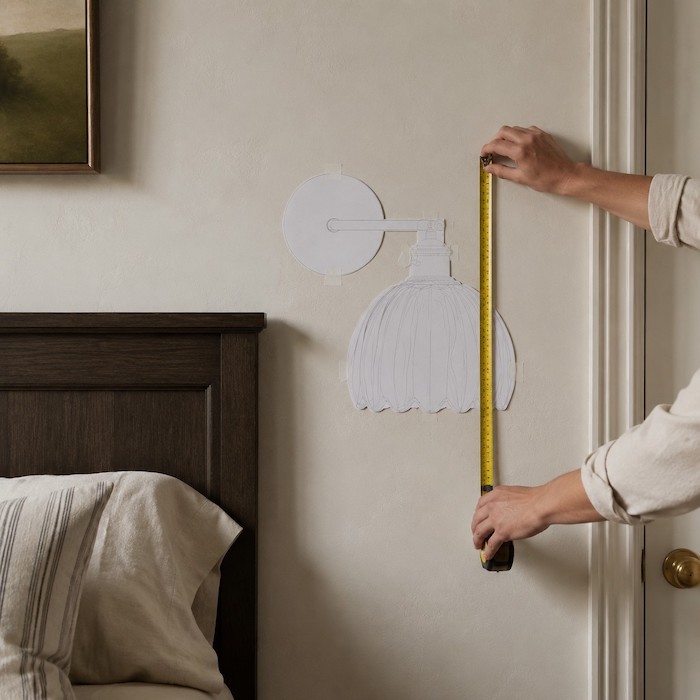
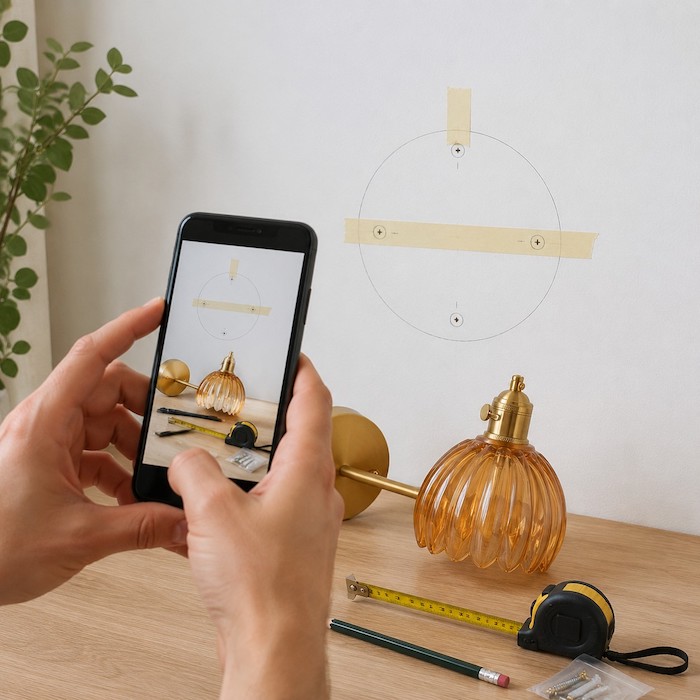
The same 165 cm mark can feel low beside a tall headboard, high above a deep mattress, or intrusive in a narrow corridor. Tape a paper circle or the product carton to the wall at the standard height, then walk, sit and lie down where the light will actually be used. If the bright point catches your eye or the switch forces a stretch, move the mock-up a few centimetres and test again.
Check both the centre of the shade and the wall plate. A good-looking shade position can still leave a switch unreachable or a plate colliding with trim, tiles or a concealed cable route. In a bedroom where the table cannot carry a lamp, first use What to Do When a Small Room Has No Space for a Table Lamp to confirm that a wall fitting solves the right problem.
Bedside: Start 75 to 90 cm Above the Mattress
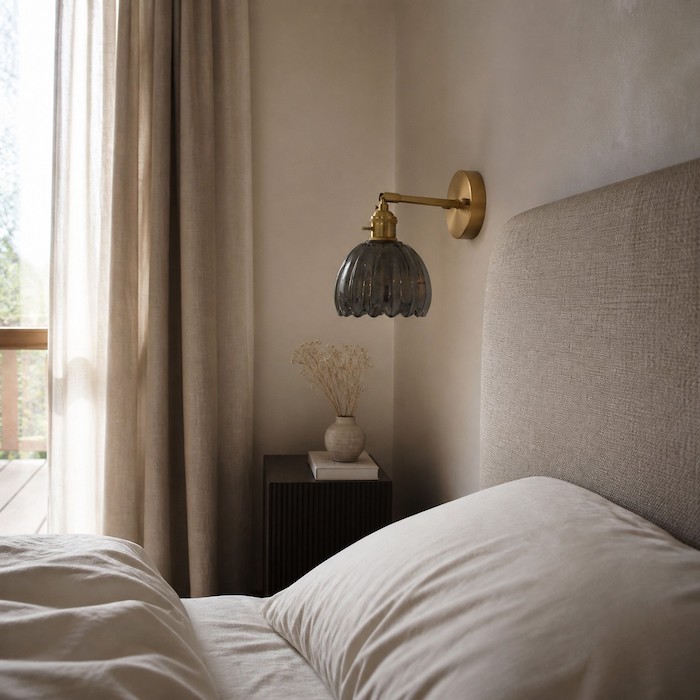
Measure from the top of your mattress, not the floor, because bed frames vary wildly. At the standard 75 to 90 cm mark the shade usually sits near your seated shoulder: easy to reach from bed, low enough to stay out of your sightline when you lie down. Reading in bed argues for the lower half of the range; a high headboard or thick topper argues for the upper half.
Test both sides of a double bed, because symmetry matters less than comfort when one side has a wardrobe or window. Once the taped mock-up feels right, compare its outline with the current S98 dimensions and controls to confirm the wall plate and switch land where your hand actually reaches.
Hallway: Eye Level Near 165 cm
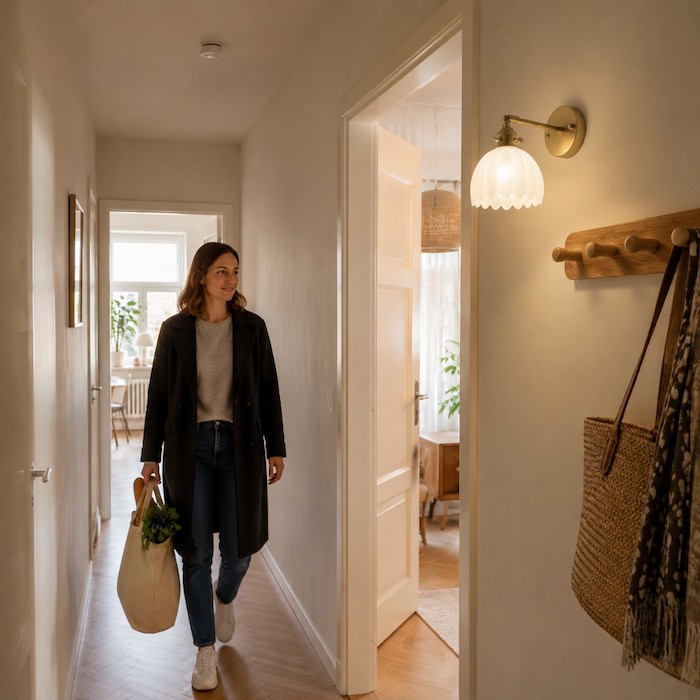
Mounting the shade centre around 165 cm keeps the source near eye level without glaring straight into it, and suits most adults walking through. In a tight corridor, clearance beats aesthetics: stand at the narrowest point with a bag on your shoulder, open every nearby door fully, and only then decide whether the standard height or a slightly higher mark keeps the fitting out of the traffic path.
Bathroom Mirrors: Face Height and Safety First
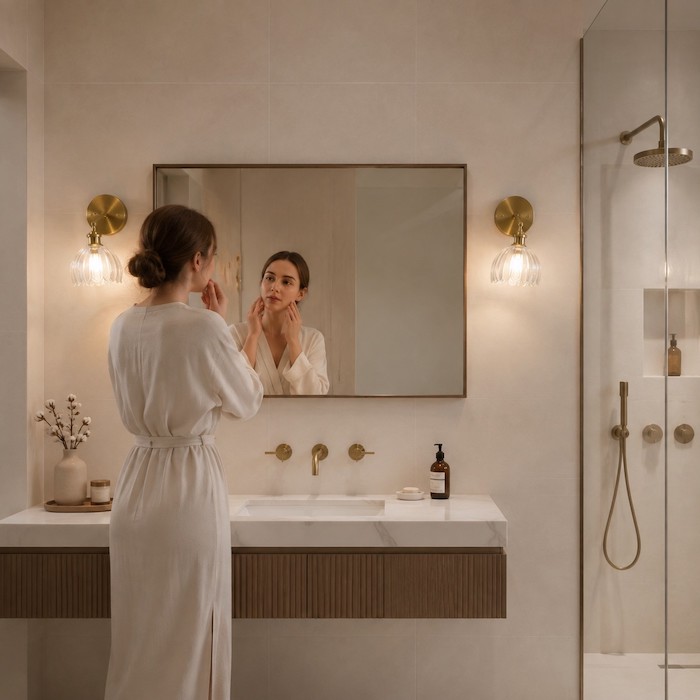
Beside a mirror, aim for your standing eye level, roughly 150 to 165 cm from the floor, with a sconce on each side where space allows. Light at face height fills shadows under the chin and eyes far better than a single downlight above the mirror, which is why grooming spaces favour this arrangement.
Before height, though, comes safety. Check the fitting's ingress protection rating against your bathroom's wet zones and confirm the wiring method with a qualified local installer. If the choice between fixed and portable light is still open after these checks, compare it with Wall Sconces vs Bedside Lamps: Which Saves More Space in a Small Bedroom? before recording a drilling point.
Record the Final Mark Before Drilling
- Photograph the taped mock-up from the position where you will use the light.
- Check it from every relevant direction: pillow, doorway, hallway approach or mirror.
- Mark the wall-plate edge, cable path and safe fixing area.
- Confirm bulb access and switch reach from the bed or corridor.
- Ask the installer to assess the final point before permanent work.
Keep the photograph and final measurements beside the product record. When the mark works from every viewpoint, compare it with the current S98 product page one last time, and order only after the listed dimensions, control position and your documented wall location all agree.
Height Questions Before Installation Day
What is the standard height for a bedside wall sconce?
Mount the shade centre about 75 to 90 cm above the top of your mattress, which typically lands 110 to 130 cm from the floor. Test from your own pillow before drilling, because mattress depth and headboard height can shift the comfortable mark by several centimetres.
How high should hallway sconces be?
Around 165 cm from the floor to the centre of the shade suits most homes. Go slightly higher in a narrow corridor so shoulders, bags and doors clear the fitting comfortably.
Should bathroom sconces go above or beside the mirror?
Beside the mirror at standing eye level gives the most even face light. An over-mirror fitting works where wall space is tight, but place it high enough to avoid shadows under your eyes and chin.
Do I measure to the shade centre or the wall plate?
Mark both. The shade centre sets the light and sightline, while the wall plate decides mounting, control reach and whether the fitting clears nearby trim or tile.
What if my ceiling is unusually low or high?
Keep measuring from your mattress, your eye level and your door swing rather than from the ceiling. Sconces serve the person in the room, so body-based reference points stay valid even when the architecture does not.


