
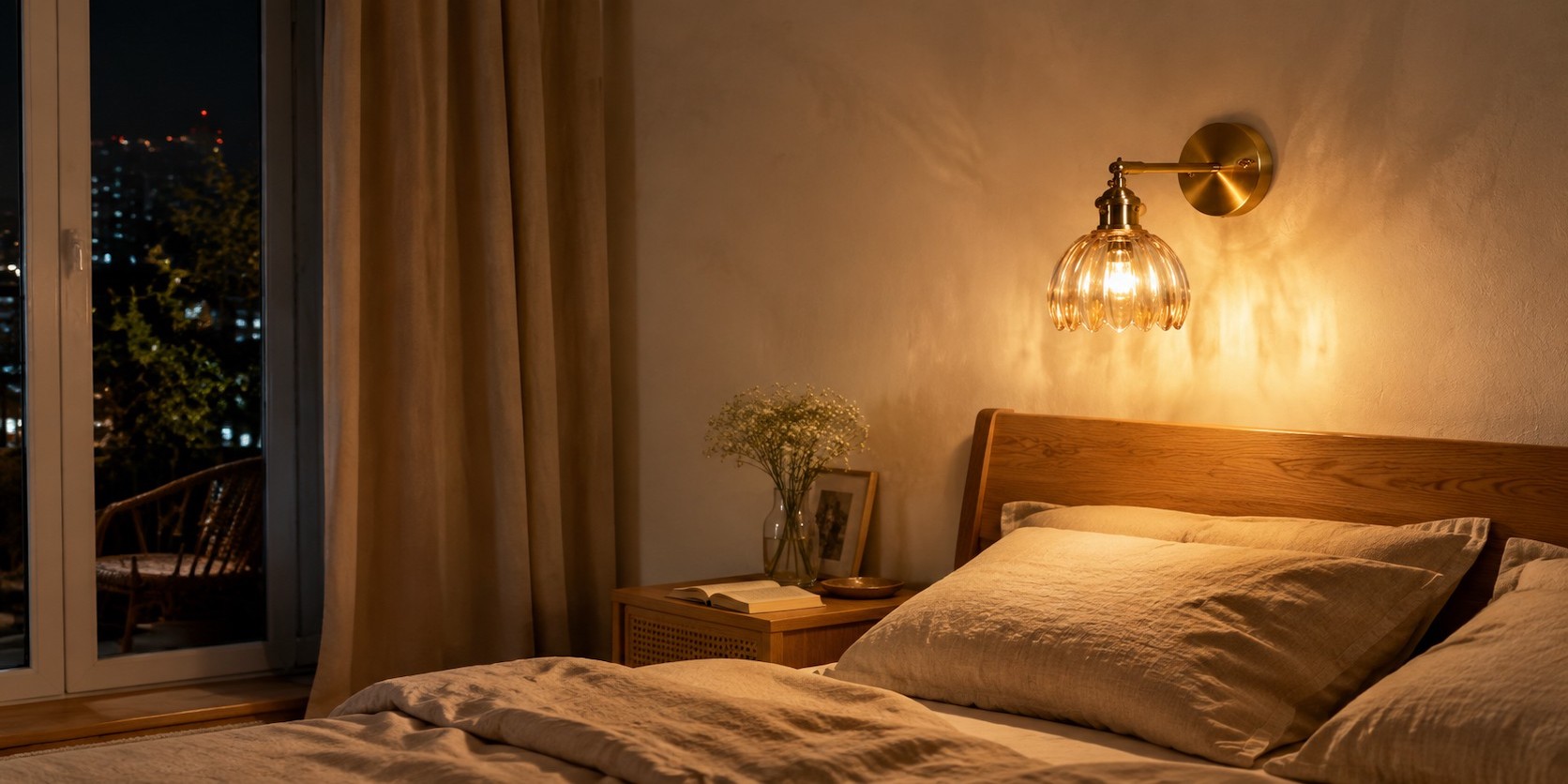
Why Your Bedside Lighting Feels Harsh and How a Glass Wall Sconce Softens It
Harsh bedside light is usually a sightline and contrast problem, not simply a too-bright-bulb problem. Test the light while lying down first; then move the bright point out of view, reduce its output, or add a softer second light before buying a new fitting.
Find the Brightest Point From the Pillow
Turn on the light you use most often and sit where you normally read. Then lie down on both sides of the bed. If you can see a bare filament, a bright LED surface, or a sharp reflection in a glossy wall, your eyes have to adapt to a small intense point. That is why a lamp can feel acceptable when you enter the room yet unpleasant at bedtime.
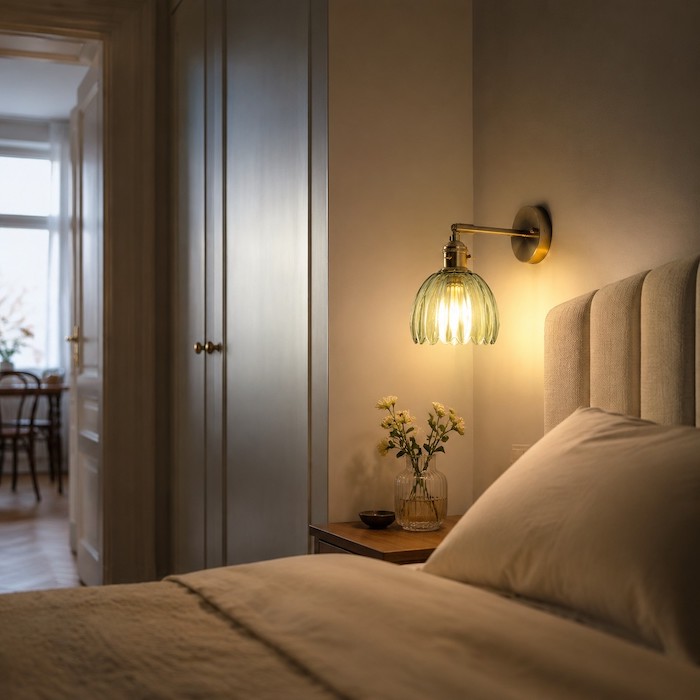
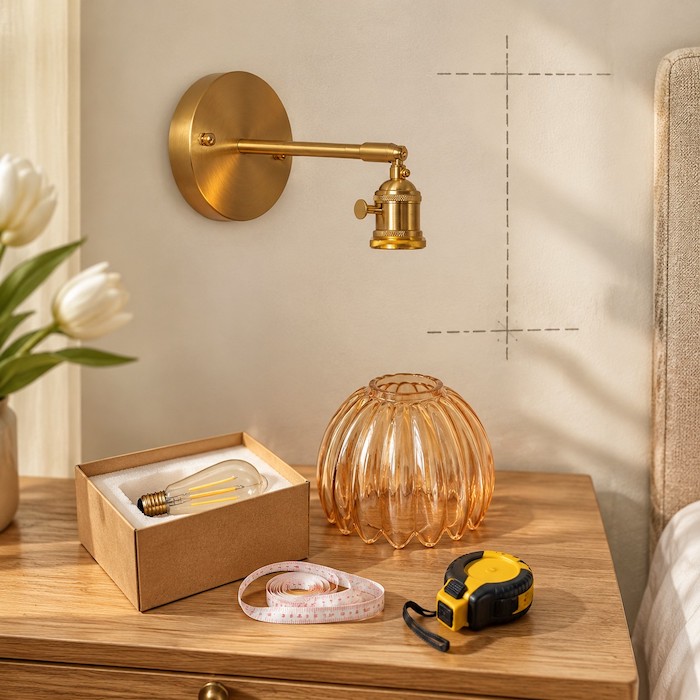
If the pillow test identifies a workable zone, compare the taped outline with the S98 dimensions and switch details. This keeps the next decision tied to real clearance and reach rather than a styled bedroom photograph.
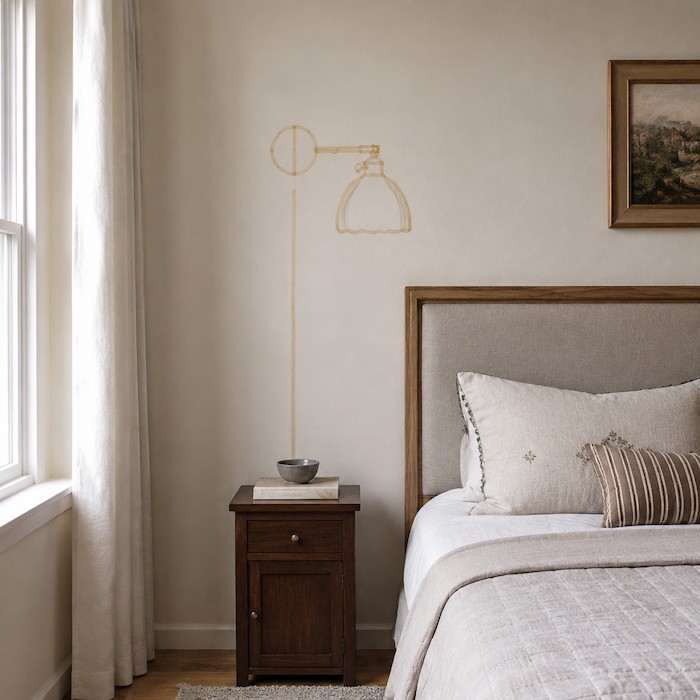
Use painter's tape to mark a proposed wall-light position. A good position keeps the shade outside the direct line from pillow to ceiling and leaves enough room for a book, headboard, and raised duvet. This simple test is more useful than copying a height from another bedroom.
Do Not Ask One Light to Do Every Job
Bedside lighting has at least two jobs: gentle orientation when the room is dark and enough directed light for a page or a drawer. A decorative sconce can make the first job calmer, but it may not replace a dedicated reading light. If you regularly read fine print, plan for a separate task-light source instead of raising the bulb output until the whole wall becomes glaring.
- Use the sconce for mood and easy reach at bedtime.
- Use a focused reading light when you need detail.
- Keep a softer ambient layer so the wall light is not the only bright object in the room.
If the shade finish is now the main uncertainty, use Colored Glass vs Frosted Glass Wall Sconces: Which Better Suits a Bedroom? to decide whether the room needs colour character or stronger diffusion.
What a Glass Shade Can and Cannot Change
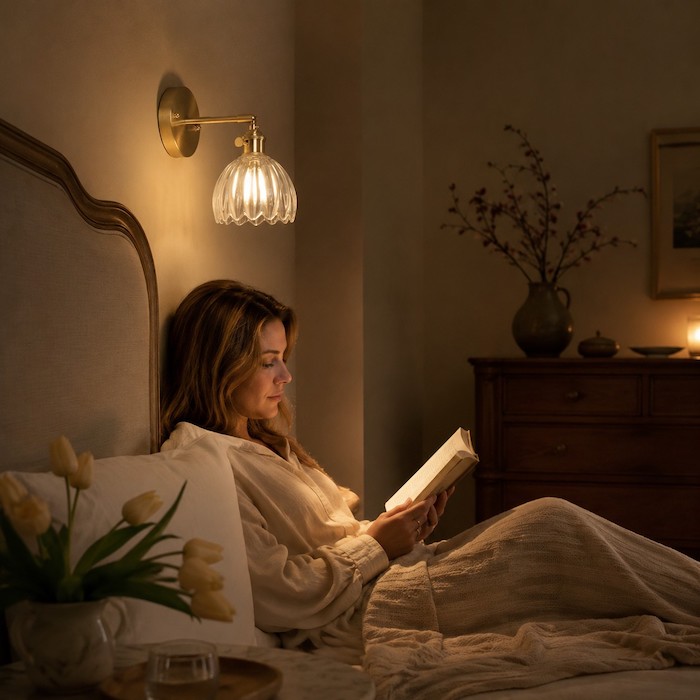
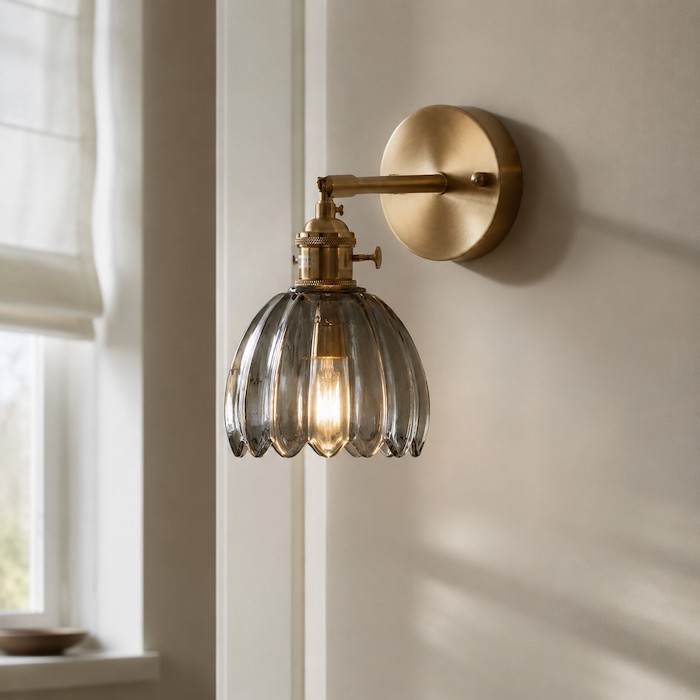
Glass changes how visible the bulb feels, but it does not guarantee low glare. A clear or lightly tinted shade can still show a bright source; amber, green, and smoky tones also alter the nearby wall colour. Choose the finish in the actual room conditions, including daytime and the darker evening hours when you use the bedroom most.
The SIMIG S98 product page lists a compact 23 cm overall height, a 12 cm glass shade, and a 13.5 cm wall plate. Those dimensions can suit a narrow headboard zone, provided the control is reachable and the bulb does not sit in your direct view.
Make the Bulb Choice After the Position Test
The S98 is listed with an E26 light source, a 40W maximum, no included bulb, and a non-dimmable push-button switch. Confirm the base, physical bulb size, and rating before ordering a bulb; do not assume that a dimmable bulb can add dimming to a non-dimmable fixture. Start with a modest-output warm-white bulb for winding down, then reassess from bed height.
A Five-Minute Bedside Trial
- Switch off the main light and turn on only the proposed bedside source.
- Look at the fitting from both pillows, seated and lying down.
- Open a book and notice whether the page is bright while the bulb is outside your view.
- Reach for the switch without stretching over bedding.
- Walk out of the room and check whether the light creates a hard hotspot on the opposite wall.
When all five checks pass, review the available glass finishes on the S98 product page and choose the version that supports the tested bulb and wall colour. Complete the room test before ordering a matching second fitting.
If the trial fails at any stage, change the mounting height, bulb output, or lighting roles before committing to the second side of the bed. Recheck the result from both pillows after each change.
Before buying the separate light source, work through How to Choose the Right Bulb for a Colored Glass Wall Sconce so the base, physical size, output, and control limits are checked together.
Bedside Questions Worth Asking Before You Drill
Will a glass wall sconce remove all glare?
No. It can soften the appearance of the source, but mounting height, bulb shape, wall reflectance, and your lying-down sightline still decide comfort.
Can the S98 be dimmed with a dimmable bulb?
No. Its product page lists the fitting as non-dimmable, so choose the desired output first and confirm any electrical control with a qualified installer.
How close should a sconce be to the bed?
Place it where the switch is easy to reach and the shade clears bedding and the headboard. Test that exact position from the pillow rather than relying on a universal distance.
Does a warm bulb always feel less harsh?
Not always. Warmth can make a bedroom feel calmer, but an exposed high-output bulb can still create glare. Output and sightline matter first.


