
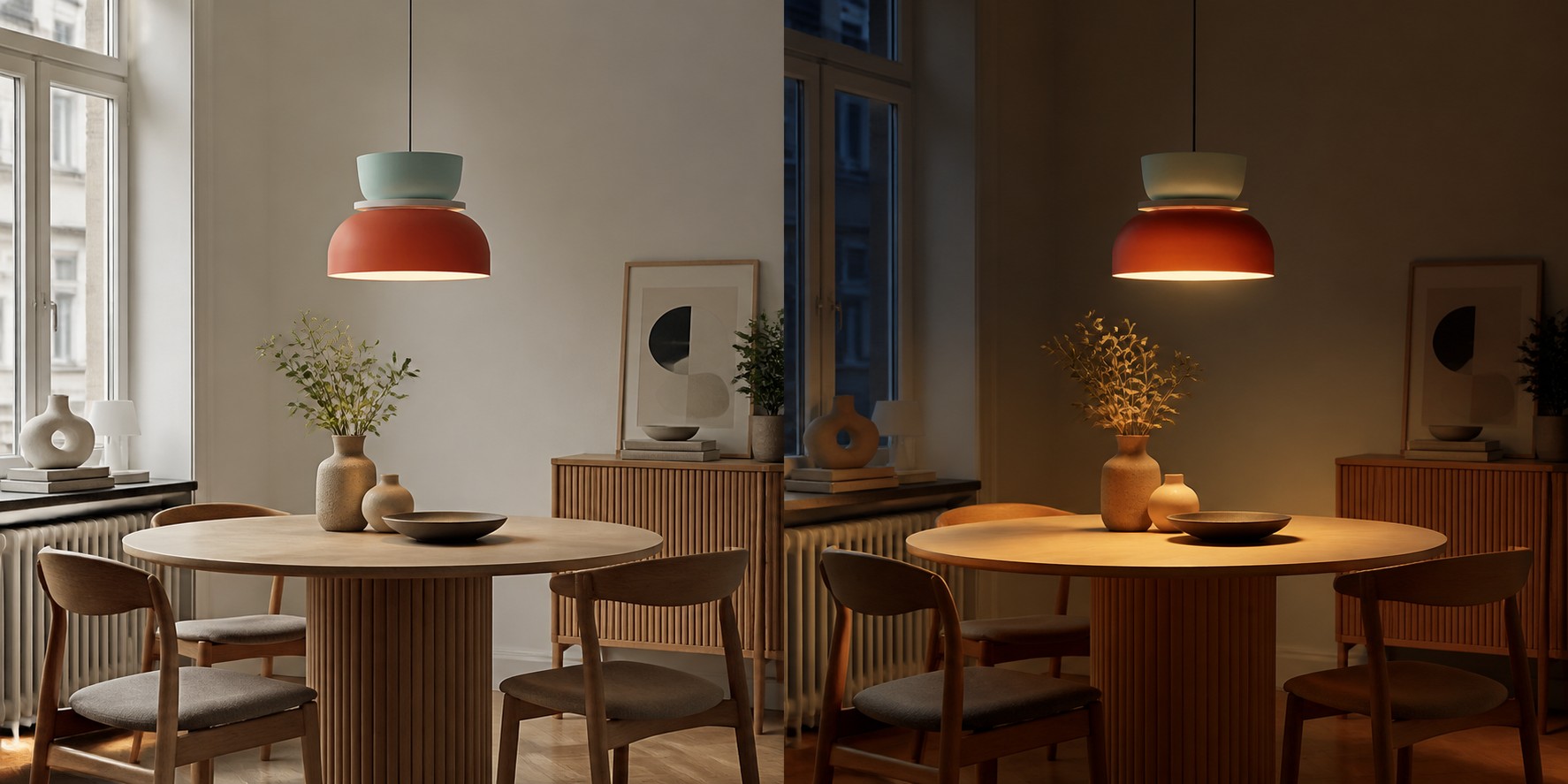
Why Your Pendant Light Color Looks Wrong at Night and How to Fix It
A pendant's colour can look wrong at night because the bulb spectrum, wall reflection, surrounding light and camera-like eye adaptation all change the scene. Test the bulb and room layers before replacing the fixture; colour is rarely caused by the shade alone.
Identify What Changed After Sunset
Compare the pendant in three conditions: natural daylight, the pendant alone after dark, and the pendant with the rest of the room lighting on. If it only looks wrong when the pendant is the sole source, the contrast is probably exaggerating its colour. If it looks wrong under every bulb, the fixture may simply clash with a fixed surface such as a wall, worktop, or floor.
Before changing the bulb or room palette, check the selected fixture against the MACRI colour and bulb details. Confirming the actual variant and E27 source keeps the evening test focused on the product you own or are genuinely considering.
Take one unedited photo in each condition if you can. It helps separate a real colour conflict from a memory of how the room felt in daylight.
If the pendant also feels disconnected in daylight, step back to the fixed-surface method in How to Choose a Pendant Light Color That Works with Your Existing Room before changing the bulb again.
Start With the Bulb, Not the Paint
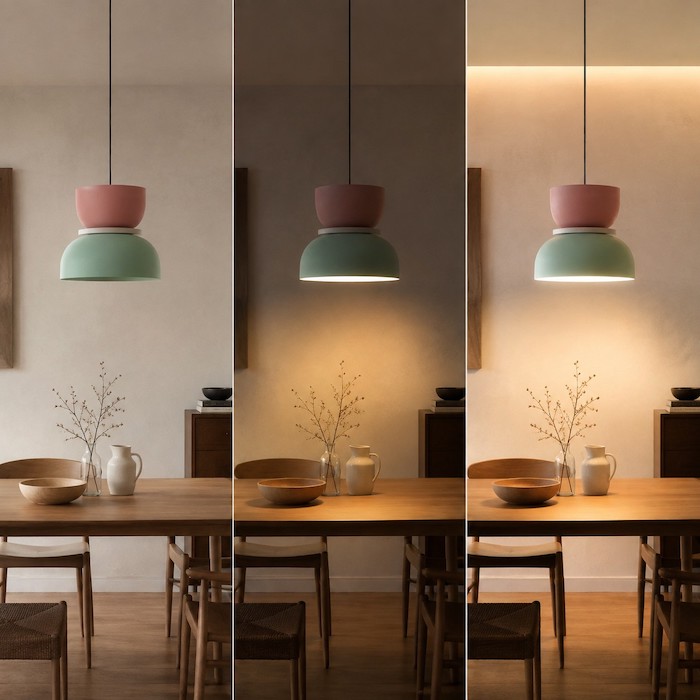
The current MACRI product page lists an E27 light source and says bulbs are not included. That means the evening result depends partly on the bulb you choose.
Colour temperature describes the apparent warmth or coolness of emitted light. This colour-temperature reference is useful for the term, but the reliable test is still the bulb in your own room.
Try one controlled change at a time. Keep the same pendant and surrounding lamps, then compare a warmer and a more neutral bulb that both suit the fixture requirements. Do not judge from a phone screen alone, because automatic camera processing can increase or reduce saturation.
Check the Wall That Receives the Light
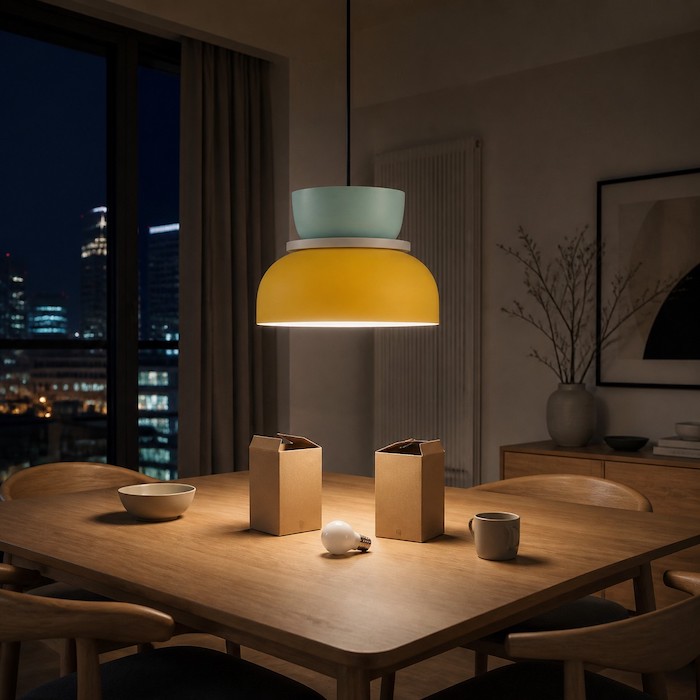
Light bounces from paint, curtains, and table surfaces back onto the pendant. A creamy wall can make light blue look softer; a strong warm wall can make orange or yellow feel heavier. In compact Polish and European apartments, a pendant often sits close to a kitchen wall or dining table, so reflected colour has more influence than it would in a large open room.
Reduce Competition, Not Personality
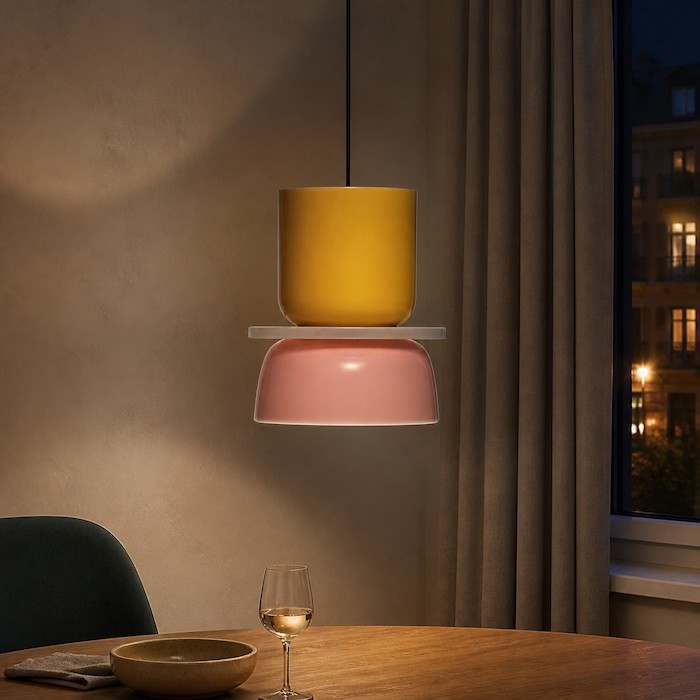
A colour-block pendant needs quiet space around it. Before changing the fitting, remove one competing accessory, switch off a decorative coloured lamp, or move a saturated vase from the direct view. The MACRI comes in several two-colour combinations and three listed sizes, so colour and scale should be chosen together. A small colourful pendant can act as an accent; a large saturated pendant can become the room's visual anchor.
When the remaining question is how much colour the household can live with, compare the commitment levels in Pastel Pendant Lights vs Bright Primary Colors: Which Is Easier to Live With? before replacing a workable palette.
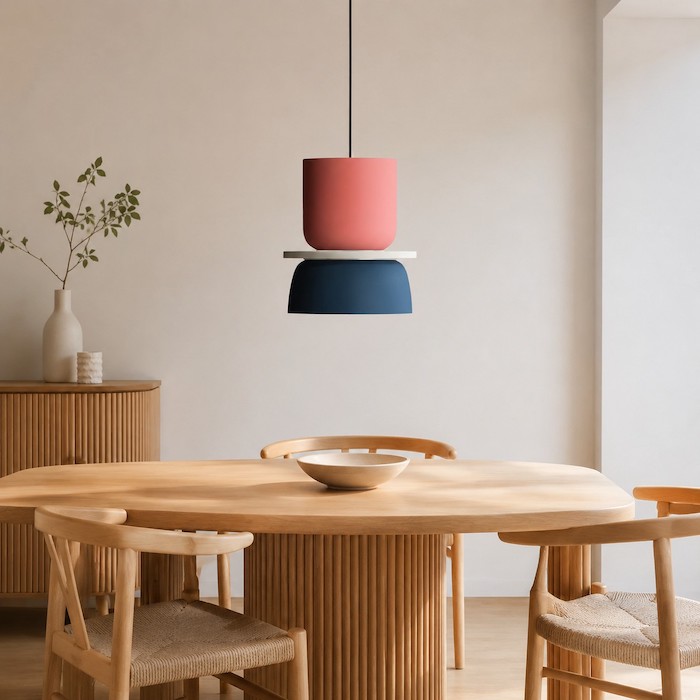
Run a 20-Minute Evening Test
- Turn on the pendant with your usual bulb and sit at the table.
- Switch on the rest of the room's ambient lights.
- Look at the pendant from the kitchen, sofa, and table, not only directly beneath it.
- Change one variable: bulb warmth, a nearby lamp, or one competing colour.
- Wait for your eyes to adjust before deciding the pendant is wrong.
Once the evening behaviour is clear, keep the bulb, ambient-light, and room-colour notes together. Change one variable at a time and judge the result from the table, sofa, and adjoining room before replacing the pendant.
If the controlled evening test solves the colour shift, revisit the current MACRI listing and confirm the exact size and colour combination. Proceed with the purchase only when the tested bulb and surrounding light reproduce the result you want.
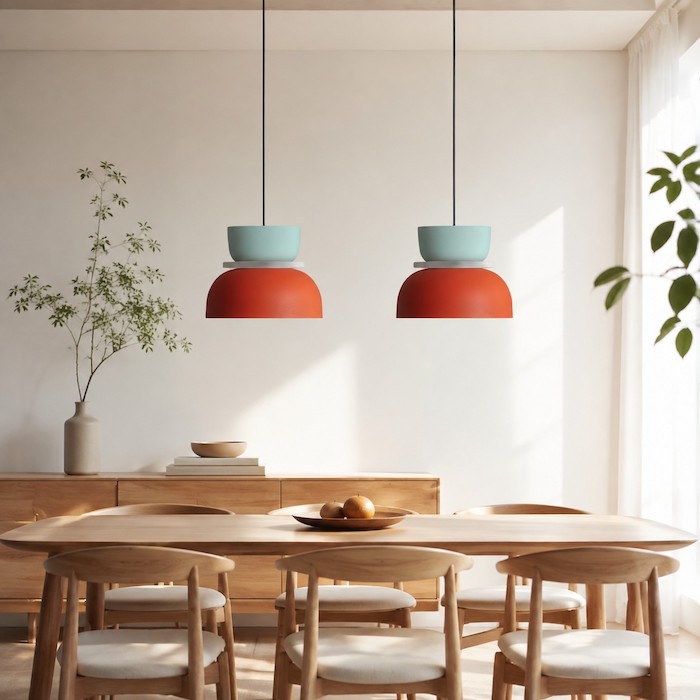
Night-Time Colour Questions
Why does my pendant look more yellow at night?
A warmer bulb, cream wall, timber table, or other warm lights can reinforce yellow and orange. Test one bulb change before replacing the fixture.
Can a different bulb make the pendant match the room?
It can change the evening impression, but it cannot remove a fundamental clash with wall paint or furniture. Use it to fine-tune, not to force an unsuitable palette.
Does a colourful pendant need white walls?
No. It needs a wall colour that does not compete at the same visual intensity. Quiet mid-tones, pale plaster and restrained materials can work well.
Why does the colour look different in product photos?
Daylight, studio exposure, screen calibration, and surrounding colours change perception. Treat the product photo as a finish reference, then test the full room at home.


